
Is Montenegro safe: what tourists need to know before their trip
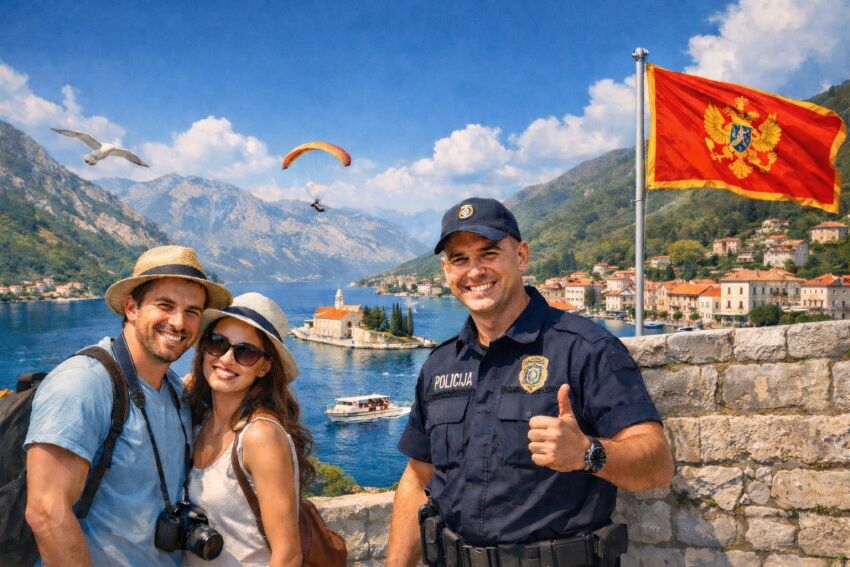
Montenegro is a country with stunning nature, a mild microclimate and tourism-oriented infrastructure. At least, if we talk about the popular postcard resorts. But are all Montenegrin cities equally friendly to travelers? Let’s find out.
Contents
Safety of cities in Montenegro
Most dangerous cities in the country
Socio-political situation in Montenegro
Road and traffic safety in Montenegro
Dangerous animals in Montenegro
Recommendations for tourists: how to stay safe while traveling
In this article I will explain how safe Montenegro is for tourists, list the main risks you may encounter and share practical tips on how to protect yourself while traveling. Let’s start with three key groups of factors that matter most for tourist safety:
- Human factor and crime rate. The portal RTVBudva published a ranking of European countries based on the Global Organized Crime Index. Montenegro took sixth place in this ranking, behind Turkey, Russia, Ukraine, Italy and Serbia. According to this index, countries such as Spain, Belarus, Bosnia and Herzegovina and France are somewhat calmer in terms of crime. At the same time, the authorities have done a lot to make tourists feel as safe as possible in the country’s main resorts. You can follow local news via the portal RTCG.
- Political situation. Montenegro is actively working on reforms and policies needed to join the EU. These political processes do not lead to serious internal conflicts and practically do not affect tourists. From time to time there are protests and demonstrations, but they usually take place in the capital and other major cities, far from the main seaside resorts, and pass relatively peacefully.
- Natural factors: earthquakes, floods, storms. Montenegro is located in the northern Mediterranean belt, in a tectonically active zone where the African plate meets the Eurasian plate. This creates complex geological structures and from time to time leads to earthquakes. Usually they are not very strong, although there are exceptions: in 1979 the country experienced a powerful 7-magnitude earthquake. In March 2024 another earthquake with a magnitude of 5.3 was recorded. Heavy rains can also cause local flooding in some cities, so it is worth checking the weather forecast carefully before your trip.
Good holidays are those when a traveler does not have to constantly think about personal safety in Montenegro because the main risks are already taken into account. And to stop worrying on the beach or in the old town, it is worth thinking about safety before you go. If you are planning your vacation in Montenegro, this guide will be useful.
I have prepared a list of Montenegrin cities where tourists can feel as safe as possible. When compiling it, I looked at crime levels, the political situation and natural risks. We will also discuss the socio-political context, road and traffic safety, interaction with local nature and wildlife, and finish with specific safety recommendations for travelers.
The article was written by travel writer Yulia Ivanova, who has extensive travel experience and knows exactly what to look at when assessing the safety of cities.
Safety of cities in Montenegro
In this overview I use several rankings from different agencies. Montenegro appears in the middle of most lists: it is neither an extremely dangerous destination nor a perfectly safe one. If you want to be confident about your safety, choose well-known tourist resorts where health, property and the rights of visitors are particularly well protected.
According to worldpopulationreview.com, Montenegro ranks around 100th in the list of countries ordered by crime rate. Venezuela has the highest crime rate at 82.1 per 100,000 inhabitants. Montenegro’s crime index is 36.9. This is not an ideal figure, but there are many destinations that are significantly more dangerous. For example, Montenegro is considered safer than Bulgaria, Germany, Russia, Malta, the Philippines or Cambodia. The key is to plan your route wisely, include the safest cities and follow basic safety rules:
- According to the UN Office on Drugs and Crime, Montenegro’s crime level is 3.5 points. For comparison, the figure for Russia is 2.4, for the USA 4.7, for South Africa 31.8 and for Colombia 100.2.
- Small seismic activity is recorded regularly, but strong earthquakes are rare. The risk of flooding is relatively high during heavy rain and snowmelt.
- The country has very diverse wildlife. Before traveling, it is advisable to get a tick-borne encephalitis vaccine. Centipedes, scorpions, spiders and snakes live in Montenegro, but they are rarely encountered in cities and on popular tourist trails.
Top 10 safest cities in Montenegro
City | Key safety features |
1. Budva |
|
2. Becici |
|
3. Petrovac |
|
4. Tivat |
(!) Be careful with taxis: some drivers tend to add a couple of extra euros to the bill. Always insist on using the meter. |
5. Herceg Novi |
|
6. Kotor |
(!) During festivals and large events crowds increase, which attracts pickpockets. Keep a close eye on your belongings. |
7. Sveti Stefan |
|
8. Rafailovici |
|
9. Przno |
|
10. Ulcinj |
|
Safest cities in the country
A holiday on the Montenegrin coast can be very safe and comfortable if you choose your destination wisely. If your goal is to relax without worrying about personal safety in Montenegro, it is best to focus on the most popular seaside resorts. Tourism is one of the key pillars of the local economy, so the authorities treat the safety and comfort of visitors very seriously. Streets in the major resorts are well lit and covered by surveillance cameras.
Below is a short list of the five safest Montenegrin resorts. You can confidently choose any of them without being overly worried about crime, natural risks or dangerous wildlife. Of course, no place in the world is completely free from force majeure, but here the main risks are reduced as much as possible.
- Budva. The Old Town of Budva is always full of tourists, yet visitors report feeling relaxed and at ease. The city has modern lighting and a comprehensive CCTV system, which keeps serious crime to a minimum. You can stroll the narrow streets of the Old Town, relax on the beaches and explore historical sites without feeling unsafe.
- Becici. This is an excellent choice for travelers who prefer classic beach holidays and families with children. Serious crime is rare, although, as in any popular resort, you should still be mindful of pickpockets and not leave valuables unattended. The beach is sandy-pebble with a gentle entry into the sea and almost no waves, making swimming safe for both adults and kids.
- Petrovac. A stylish, upscale resort that offers a high level of safety for every guest thanks to good lighting and widespread CCTV coverage. Petrovac is relatively expensive, so there are fewer mass tourists and crowds, and you can enjoy a calm, secure atmosphere.
- Herceg Novi. The only real danger here is that you may fall in love with the town and never want to leave. In terms of safety everything is standard for Montenegro: good lighting, cameras on the main streets and very friendly locals who are ready to help. If you come for diving, water sports or boat trips, remember that these activities always involve some risk and basic safety rules should be followed.
- Kotor. An ancient town that has seen Roman legionaries, Byzantine merchants and rulers from different Balkan states. The Bay of Kotor is well protected from winds, and local beaches are considered comfortable and safe. Locals are welcoming, lighting is good and there are many cameras. In short, all conditions are in place for a relaxed seaside and cultural holiday.
As in any tourist city, even in the safest resorts there is always a risk of pickpocketing. Follow standard safety rules in Montenegro: do not carry all your cash with you, store valuables in a secure place and avoid flashing expensive jewelry and accessories in crowded areas.
Most dangerous cities in the country
Talking about the “most dangerous” cities in Montenegro is a bit of an exaggeration. Overall, this is a calm country that offers comfortable and pleasant holidays. However, there are locations where it is worth being more cautious, mainly because of political events or the geographic specifics of the region.
- Podgorica. The capital is not the most attractive city for tourists and is located far from the main coastal resorts. As in many capitals, protests and strikes are most likely to take place here. Such events rarely affect tourists directly, but they can cause delays in public transport or temporary closures of streets.
- Cetinje. The former royal capital, where the president’s official residence and several national institutions are located. Demonstrations and protests can also be held here. However, they rarely relate to tourists. Cetinje is a small town that can be explored in a few hours, and it has no direct access to the sea, so it is not a classic holiday destination.
- Regions located near the border with Kosovo. The landscapes here are very beautiful, but there are still unmarked minefields in some areas. If you decide to travel in this region, stick to well-used paths, avoid abandoned places that look suspiciously empty and do not leave marked routes. Stay away from zones where military activity is taking place and avoid people who make you feel uncomfortable.
It is difficult to single out truly “dangerous” resorts in Montenegro. The country is generally safe and very friendly to travelers, so the risk of serious threats to your physical or mental health is low. Still, common sense should never be switched off: on the beach you can step on a sea urchin if you walk barefoot, in the mountains rockfall is possible on unmarked trails, and in forests there is always some fire risk in dry summers. Be mindful of your surroundings and your holiday is likely to be carefree and pleasant.
One more important point: danger in Montenegro can be found not only on beaches or in the mountains, but also on some roads. The Kolašin - Podgorica highway is known as one of the most challenging and dangerous roads in the region. It is a spectacular mountain route but does not forgive mistakes, especially in bad weather. If you need to drive along this road, travel only in daylight, in good weather and strictly observe the speed limit. The road runs through the Morača canyon: on one side there is a deep gorge with the river far below, on the other a steep rock wall.
The political situation in Montenegro cannot be called completely stable. Since the summer of 2021 the country has been going through a political crisis: the Democratic Front, one of the key political forces, left the ruling coalition and effectively blocked the work of parliament.
Eventually the country formed a new government headed by Milojko Spajić. The parties that entered the coalition committed to following a pro-NATO and pro-EU course.
Naturally, there are controversial issues and part of the population is dissatisfied with the authorities. However, this does not affect tourists. Both the government and ordinary citizens understand that tourism is one of the main drivers of the economy, so visitors are treated with care and are not involved in political conflicts.
Even so, it is better to avoid long stays in the capitals - former Cetinje and present-day Podgorica - during periods of protests or large demonstrations. These are usually peaceful but can still cause some inconvenience, such as changes in public transport routes or traffic jams.
Crime in Montenegro
Everyday crime rates in Montenegro are low. Beach robberies and pickpocketing are relatively rare, there are few homeless people and beggars, and you generally do not need to constantly worry about your belongings (within reason). Leaving your phone on a café table while you go to the restroom is normal practice here, and forgotten items often remain where you left them until you come back.
Apartment burglaries are almost unheard of - there are no bars on the windows, no heavy security doors or entry codes on most buildings. Entrances are open and people leave strollers, scooters and bicycles in stairwells. Cars are often left unlocked, and in summer sometimes even with open windows. If someone blocks you on a parking lot, it is common to just move their car a little to free the exit. Some vehicles have alarms, but not all. Children play outside without constant supervision, and women feel comfortable walking alone even at night. All of this is especially noteworthy given the relatively small visible police presence.
Serious crime rates are also low. Statistics differ slightly from source to source, but all of them show far fewer homicides than in Russia or most EU countries. When murders do happen, they are usually connected to long-standing feuds or organized crime disputes and do not involve tourists.
Some reports claim that Montenegro is a major hub for human trafficking or drug trafficking, but in reality the situation is not as dramatic. As in any country, it is technically possible to find drugs if you really look for them, but they are not in great demand among locals or tourists.
There have been no terrorist attacks in Montenegro in recent history.
Road and traffic safety in Montenegro
Overall, the road network in Montenegro is in satisfactory condition. Rural roads can be damaged after bad weather or in winter, while in popular resorts the asphalt is usually in good condition. The Morača canyon route is particularly dangerous, especially in poor weather and heavy traffic. Roads leading to the coastal areas are in good condition, but in high season they can be very crowded.
If you drive, strictly follow local traffic rules. A small speeding violation of 10 km/h already leads to a fine. If you exceed the limit by 30 km/h in towns or 50 km/h on highways, or if you overtake in dangerous conditions, your driving license may be confiscated on the spot.
In very hot weather, when temperatures rise above 40°C, drivers risk heatstroke, which can cause headaches, fatigue, weakness, nausea and vomiting and significantly reduce concentration. If you are driving in such conditions, drink cool still water regularly, use air conditioning and eat small but frequent meals.
On mountain passes and serpentine roads be especially careful. In recent years the number of accidents involving motorcyclists and cyclists has increased there, and some drivers still try to overtake in places where it is prohibited.
Be extra cautious during and immediately after rain. After long dry periods, dust mixes with water and forms a slippery film on the asphalt, so even at normal speed the road can become difficult to control.
Natural factors in Montenegro
Many Montenegrin beaches are awarded the international Blue Flag, which since 1987 has been granted to marinas and beaches where water quality meets strict safety standards. In Europe this award is presented each year on June 5. Dozens of beaches in Montenegro received the Blue Flag in 2023, including SBS, Blue Beach, Poseidon, San Trope and Dolcevita in Budva, Miami, Havana and Copacabana in Ulcinj and Blue Horizons and Przno Bay in Tivat. A similar number of awards is expected in 2024, so lovers of safe, clean beaches will have a wide choice.
Montenegro is not just about beaches - it is also about forests. Where there are forests, there is always a potential fire risk. However, in popular resort areas tourists rarely face direct danger: local authorities closely monitor wildfires and do not allow them to approach residential zones. Visitors may see smoke from afar when going on mountain excursions. If you see a forest fire, call the emergency number 112.
There is also some risk of earthquakes and floods, but these natural disasters are relatively rare. As mentioned earlier, in March 2024 Montenegro experienced an earthquake slightly above magnitude 5, and before that the last major one was in 1979. Even so, it is wise to follow local media, watch for official announcements and follow instructions from local authorities in case of natural emergencies.
Dangerous animals in Montenegro
If you plan to spend a lot of time on the beach, pay attention to where you step. Sea urchins hide between the stones and pebbles - they look harmless but their spines are very painful. Wear proper water shoes when walking into the sea to avoid unpleasant encounters.
Brown bears and wild boars live in the country’s mountainous and forested areas, but the risk of meeting them is very low if you stick to marked hiking routes and do not explore remote, overgrown trails on your own.
Black widow spiders are present in some regions. They are small but venomous. They do not usually attack people first, but can bite if they feel threatened. Symptoms of a bite may include muscle cramps, fever, headache and nausea, and require medical attention.
Recommendations for tourists: how to stay safe while traveling
- Take care of your health in advance. The most common diseases in the region include hepatitis B, tetanus and various intestinal infections. Get the recommended vaccinations before your trip to reduce health risks and avoid having your holiday spoiled by illness. In some areas there have also been cases of hemorrhagic fevers, so comprehensive travel insurance is strongly recommended.
- As in any other country, drink bottled water if you are sensitive to changes in water quality. To reduce the risk of stomach upsets, eat properly cooked food, especially dairy products, and wash fruit and vegetables thoroughly.
- When planning your trip, take local specifics into account. In areas near Kosovo, unmarked minefields may still exist, and some neighboring regions have a history of ethnic tensions. Check up-to-date travel advice from your embassy and avoid potentially unstable zones.
- Choose your destinations carefully, especially if you prefer remote areas that are far from popular resorts and outside well-developed infrastructure. When hiking, stay on marked trails. Local snakes and some insects can be dangerous, and in the sea you may encounter sea urchins or stinging jellyfish. In the mountains choose well-known tourist areas where rockfall risks are minimized.
- In terms of crime, Montenegro is generally a very calm country where you do not need to fear for your life. However, you should still protect your wallet and valuables, especially on popular beaches and in busy tourist centers where pickpockets are more active.
Conclusion
Montenegro is a small Balkan country with a unique history, impressive architecture and dramatic landscapes. The government places great hopes on the tourism sector and therefore works hard to offer visitors safe and comfortable conditions.
If you choose your destination wisely, follow basic safety rules and respect local nature, Montenegro will most likely welcome you with a calm, relaxed and very safe holiday.
Socio-political situation in Montenegro